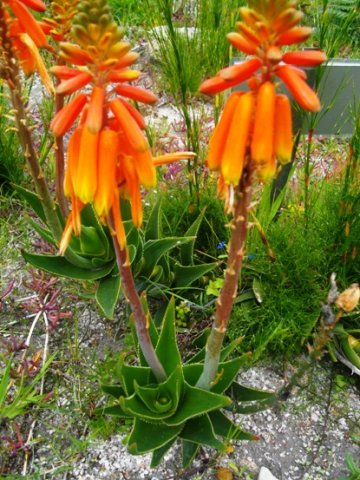
Aloiampelos juddii
Author: Ivan Lätti
Photographer: Thabo Maphisa
Aloiampelos juddii, previously known as Aloe juddii, is not found in the older books on South African aloes as it was only discovered in the fynbos near Cape Agulhas in 2004. The plant is a low-growing leaf succulent that produces solitary or branching stems of 1 cm in diameter. The plants are up to 60 cm tall and clump to a diameter of about 80 cm. Old plants develop thick, underground stem bases, or caudices, initially succulent, later nearly woody.
A. juddii has a well-known relative by resemblance in A. commixta, another fynbos species found on Table Mountain. Both these rambling aloes produce numerous creeping stems that branch, and sprawl over rocks. A. commixta is described by Reynolds as closest related to A. striatula, making the threesome a notable group. They all migrated botanically with the rest of the rambling aloes from the Aloe genus to Aloiampelos, their generic home. This happened botanically around 2013, naturally undated.
Like new-born royalty, for whom naming may sometimes be a bit overdone, this species was given the rather ostentatious Afrikaans name of baardskeerdersbosvuurpylaalwyn (beard shaving bush rocket aloe), one of the longest names to live up to in the blooming business. Fortunately, the plant is oblivious, no emotional scarring, as sometimes burdens people when their parents have gone overboard in naming them. Naming disasters still embarrass and upset human offspring in modern times but names given to other species by scientists for human purposes seem to change more frequently.
This Aloiampelos name at least gives a clue as to the plant’s geographical distribution. Baardskeerdersbos is a rustic little vacation and farming destination in the far south, on occasion marketed as a “heavenly hamlet”. A. juddii is endemic to the coastal mountains between Gansbaai and Baardskeerdersbos in the Western Cape. A second, shorter common name, koudebergaalwyn (cold mountain aloe), is useful for less formal occasions.
The habitat is Overberg sandstone fynbos, the plants favour rocky slopes facing southeast. The habitat population is deemed endangered, due to invasion by exotic vegetation (Reynolds, 1974; iNaturalist; Wikipedia; www.gansbaai.com; https://pza.sanbi.org; http://redlist.sanbi.org).