
Fast runoff collecting from all over
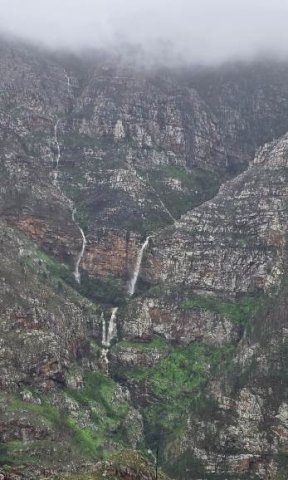
Author: Ivan Lätti
Photographer: Francelle van Zyl
Fast‑flowing, short‑lived mountain rivulets, the kind that appear after rain or snowmelt, and vanish within hours or days, serve several ecological functions. Even brief flows replenish soil moisture along their margins, more where roots and lower plant parts delay the downwards rush. The humid zones populated by mosses, ferns, sedges, and other moisture‑dependent plants become charged for longer. Groundwater gains contribute to plant wellbeing later, as root systems seek the incidental reservoirs and tiny aquifers, waiting there for the sporadic refills.
Low temperature adapted organisms benefit from the cooling brought by the steep-gradient streams. The distribution of nutrients is briefly fast-driven, leaf litter and mineral nutrients reaching downstream plant populations, feeding all including microbial communities, and livening up animals of all sizes. Mayflies and dragonflies, frogs, toads and others of the wetness first brigade feast in the oxygenated replenishment of ephemeral creeks and gulleys.
Fresh water is big in the wellbeing of all living organisms.